

04 Jul How Tobacco Leaves Are Selected Before a Cigar Is Ever Rolled
How Tobacco Leaves Are Selected Before a Cigar Is Ever Rolled
Long before a cigar takes shape in a roller’s hands, there is a quieter, more exacting work happening in the tobacco fields and curing barns. Selection begins with the leaf itself, but it is never just about color or size. Growers, agronomists, and factory buyers look for balance, texture, aroma, and the kind of structure that can survive drying, fermentation, and aging without losing character. In cigar tobacco, a leaf is not simply harvested. It is judged, sorted, and assigned a future based on what it can become.
That process is part agriculture, part craft, and part instinct. A leaf that looks perfect to a visitor may be rejected because its veins are too coarse, its surface too thin, or its elasticity too weak. Another leaf, less polished at first glance, may be prized because it carries oil, depth, and resilience. This early selection shapes everything that follows, from the burn of the finished cigar to the way its flavor opens slowly over time. 
What Growers Look For in the Field
The first decisions happen while the tobacco is still growing. Experienced growers walk the rows and read the plant the way a vintner reads a vineyard. They look at the lower, middle, and upper primings, because each position on the stalk develops differently. Leaves lower on the plant tend to be thinner and milder, while upper leaves often carry more strength and richer oils. Not every leaf is meant for the same purpose, and that is where selection starts to become practical.
At this stage, the main concern is whether the leaf has the right physical promise. Growers inspect the leaf for uniform thickness, healthy color, and a surface that feels supple rather than brittle. They also watch for signs of insect damage, disease, sun scorch, or irregular growth. A leaf with visible flaws may still be usable in some blends, but the best cigar tobacco begins with plants that grew evenly. Consistency in the field often becomes consistency in the finished cigar.
Weather leaves its mark early, and growers know how to read it. Too much rain can make a leaf large but watery, while drought can leave it small and stressed. Wind, heat, and soil conditions all influence how the plant matures. A good selector is not searching for perfection in a laboratory sense. Instead, the goal is to identify leaves that matured under conditions that gave them strength, aroma, and the right amount of natural oils. That judgment is often made in the field, before any leaf is cut.
There is also a timing issue that matters more than many people realize. Tobacco is harvested in stages, not all at once, because leaves on the same plant ripen at different rates. Pick too early and the leaf lacks depth. Pick too late and it may become coarse or lose balance. The best growers choose the moment when the leaf has reached a kind of quiet maturity, firm enough to handle, but still alive with the qualities that make fermentation worthwhile.
- Lower primings usually bring lighter body and finer texture.
- Middle leaves often provide balance and dependable combustion.
- Upper leaves tend to offer more strength, oil, and intensity.
- Leaves with disease, tearing, or uneven growth are set aside early.
Sorting, Curing, and the Hidden Work of Judgment
Once the leaves are harvested, selection becomes more visible and far more detailed. In curing barns, tobacco changes color as moisture leaves the leaf and natural chemistry begins to shift. Workers monitor the pace carefully, because curing too quickly can trap harshness, while curing too slowly can invite mold or dull the leaf’s character. The leaf that emerges from the barn is not yet ready for a cigar, but it is ready to be judged more seriously.
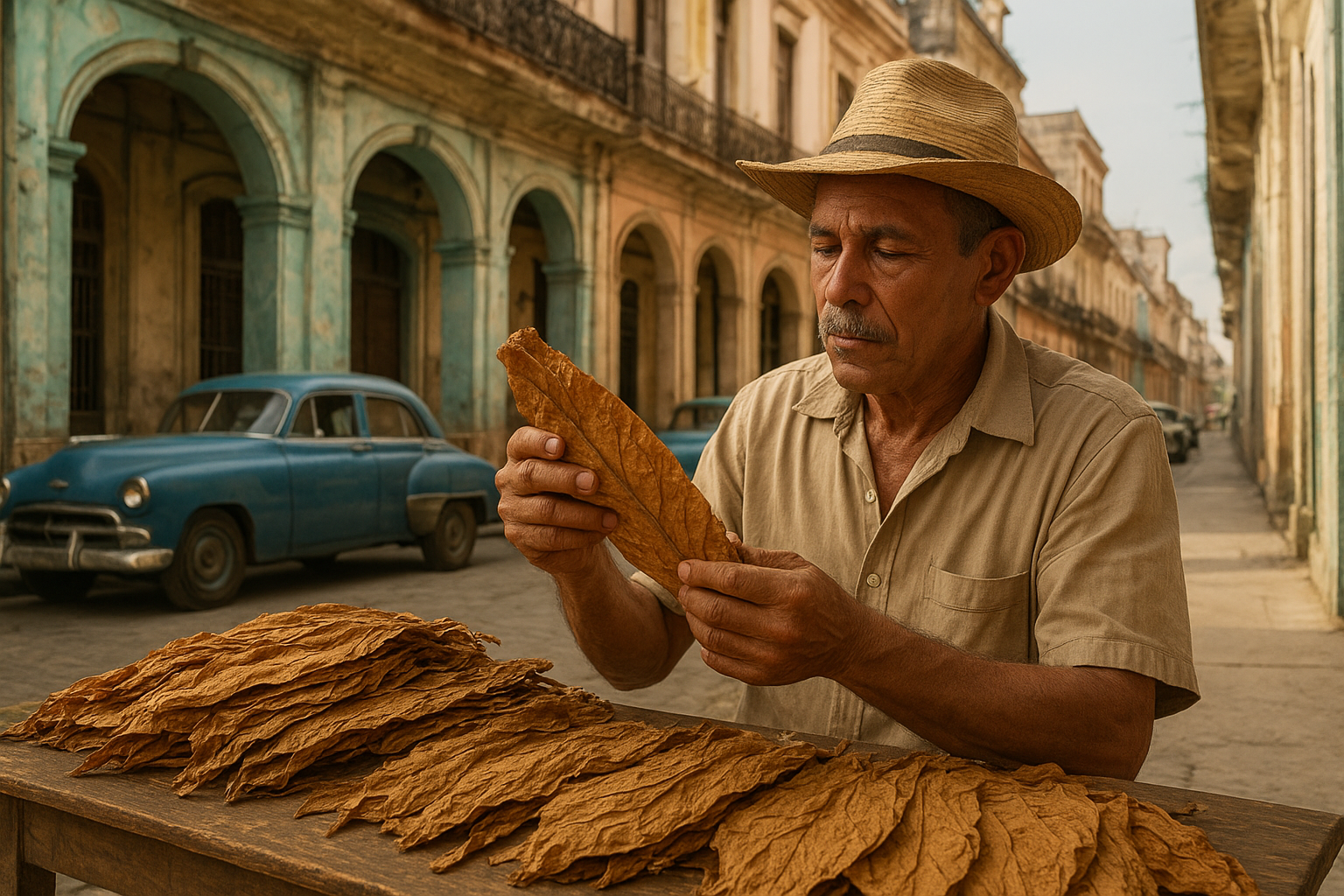
At this point, graders and factory buyers examine the leaves in bundles or hands, often under natural light or in rooms designed to reveal subtle differences. They look for color uniformity, vein structure, elasticity, and the presence of oil on the surface. A leaf that bends without cracking is valuable. A leaf that feels dry but still resilient is promising. They also note aroma, because scent can reveal whether the leaf was cured cleanly and whether its underlying character is stable enough for aging.
There is a quiet hierarchy in cigar tobacco, and each leaf is assigned a role. Some will become wrapper leaves, where appearance is critical and flaws are not tolerated. Others will become binder leaves, where strength and flexibility matter more than visual perfection. The rest may be destined for filler, where flavor, combustion, and blend contribution take priority. This is why selection is never a single test. It is a series of decisions that match the leaf’s strengths to the job it can do best.
Fermentation adds another layer of scrutiny. During this stage, heat and time help soften sharp edges and deepen the leaf’s character. But not every leaf responds the same way. Some are rich and stable, while others need more careful handling to avoid becoming flat or overly aggressive. Selectors pay attention to how the leaf behaves in piles, how it warms, and how its aroma changes. The best tobacco does not merely survive fermentation. It improves in a way that feels deliberate and alive.
In many cigar regions, this work is passed down through families or learned through years of repetition. A grader can often tell, by touch alone, whether a leaf will hold up in a wrapper or break under pressure. That knowledge is not mystical, though it can look that way from the outside. It comes from handling thousands of leaves, remembering how they behaved months earlier in the field, and understanding how small differences now will shape the cigar later. 
How the Best Leaves Become the Right Blend
After curing and fermentation, the real artistry begins. Blenders do not simply choose the strongest or prettiest leaves. They build a relationship between leaves that complement one another. One leaf may bring sweetness, another structure, another spice, and another a slow, even burn. The goal is not to make every leaf stand out. It is to create a cigar that feels coherent from the first draw to the last inch. Selection at this stage is about harmony, not individual brilliance.
Blenders often work with samples from different primings, farms, and harvest years. They test how the leaves behave when combined, because tobacco can change dramatically in a blend. A leaf that seems too sharp on its own may provide brightness in a supporting role. Another that feels too mild may become essential for balance. This is why cigar making depends so heavily on memory and comparison. The blender is always asking how one leaf will speak next to another.
Texture matters as much as flavor. If a wrapper leaf is too fragile, it may split during rolling or show flaws once the cigar is finished. If filler leaves are too dense, the cigar may draw poorly. If the binder lacks elasticity, the whole structure suffers. Selection is therefore tied to performance, not just appearance. Every leaf must earn its place by contributing to the cigar’s construction as well as its taste.
Regional identity also plays a large role. Tobacco from different countries, and even different valleys within the same country, can express strikingly different personalities. Soil, altitude, rainfall, and local curing traditions all leave their mark. A seasoned selector knows that a leaf is never just a leaf. It carries the memory of its place. That is part of why cigar lovers often notice a sense of origin in the final smoke, even if they cannot name the farm or field.
There is a practical side to all this romance. Not every crop yields enough top-grade leaf for a full premium release. Some years are generous, others are challenging. Blenders and buyers must adapt, choosing the best available leaves without compromising the house style. That discipline is what separates a memorable cigar from one that feels assembled by chance. Selection is where standards are defended, even when the harvest is imperfect.
By the time a cigar is ready to be rolled, the leaves have already passed through multiple human judgments. They were watched in the field, handled during harvest, cured with care, fermented with patience, and sorted with an eye trained by experience. What remains is not raw tobacco in the ordinary sense. It is a set of carefully chosen materials, each one carrying a specific purpose. The cigar begins long before the rolling table, in the quiet discipline of choosing what deserves to continue.
Why Leaf Selection Shapes the Entire Smoking Experience
The final cigar reflects every decision made before rolling. If the wrapper was selected for beauty but lacked resilience, the cigar may look elegant yet smoke unevenly. If the filler leaves were chosen without regard for balance, the cigar may start strong and fade, or burn hot and uneven. Good selection creates reliability, and reliability is one of the most underrated pleasures in cigar smoking. It allows the smoker to trust the experience from the first light.
That trust is built on details most people never see. A leaf with the right oil content can help a cigar feel alive in the mouth. A binder with enough stretch can keep the structure intact without choking the draw. Filler leaves with complementary strengths can build flavor in stages, rather than all at once. The result is a cigar that evolves naturally, rather than one that feels forced. Selection, then, is not a hidden step. It is the foundation of the entire sensory story.
For readers who want to understand cigars more deeply, the most useful habit is to pay attention to the leaf before the cigar is ever lit. Notice how much of the final experience depends on patience, sorting, and restraint. The best cigar makers do not chase every leaf. They keep only the ones that can carry flavor, structure, and character with dignity. That is the real beginning of the cigar, and it happens long before the roller sits down at the table.
If you want to appreciate a cigar more fully, start by thinking like a selector. Look for balance, not just boldness. Notice how origin, texture, and construction all begin with the leaf itself. The next time you hold a cigar, remember that its quality was decided in stages, by people who knew that a great smoke is built from many small acts of judgment. That awareness changes the experience, because it reveals how much care was invested before the first roll ever happened.
You may also like: How Cigar Presses Shape Construction Before the Final Rolling Stages.
Sorry, the comment form is closed at this time.